Pay It Forward Organization is a recognized 501(c)(3) nonprofit dedicated to supporting justice-impacted youth and adults through structured reentry and rehabilitation programming that promotes accountability, self-awareness, and successful community reintegration.
To support justice-impacted youth and adults through structured reentry and rehabilitation programming that promotes accountability, self-awareness, and successful community reintegration.
A world where every justice-impacted individual has access to evidence-informed programming that supports their successful reintegration and long-term growth.
Founder & Program Developer
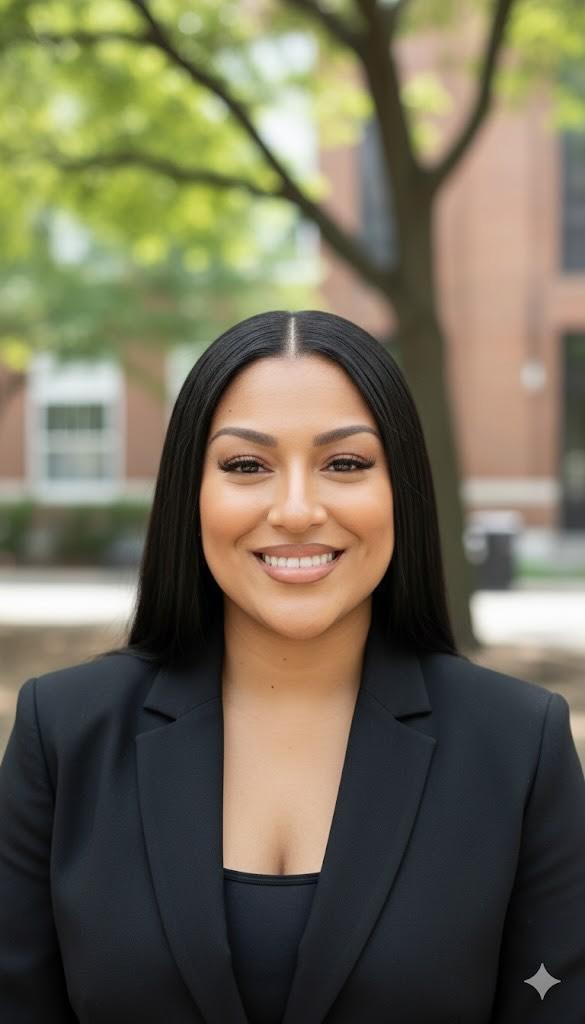
Angelique Gabrielle is the founder of Pay It Forward Organization and the creator of Coming Home Was the Hardest Part, a structured reentry curriculum for justice-impacted youth and adults. Through lived experience, education, and community-focused work, she developed programming designed to support justice-involved individuals through emotional awareness, accountability, self-reflection, communication, and personal growth.
Angelique is a formerly incarcerated individual and a current graduate student pursuing her Master's degree in Marriage and Family therapy. Her long-term vision is to bridge the gap between lived experience, rehabilitative programming, and mental health support for system-impacted individuals transitioning through difficult stages of life. Her goal is to create spaces where individuals feel seen beyond their circumstances and are given opportunities to process, reflect, rebuild, and grow without judgment.
Her work focuses on identity development, accountability, emotional regulation, and preparing participants for successful reentry and long-term reintegration. Angelique hopes to continue expanding these programs within juvenile Justice facilities, transitional programs, community organizations, and correctional settings while eventually integrating this work into her future therapeutic practice, and long-term community initiatives through Pay It Forward Organization

We believe rehabilitation requires structure, reflection, and accountability — not just information.
The "Coming Home Was the Hardest Part" reading book introduces the emotional themes, lived experiences, and reflective concepts explored throughout the overall program curriculum. The component is designed to encourage self-reflection, emotional awareness, and meaningful conversation before transitioning into guided workbook facilitation.
Coming Home Was the Hardest Part (Handbook)
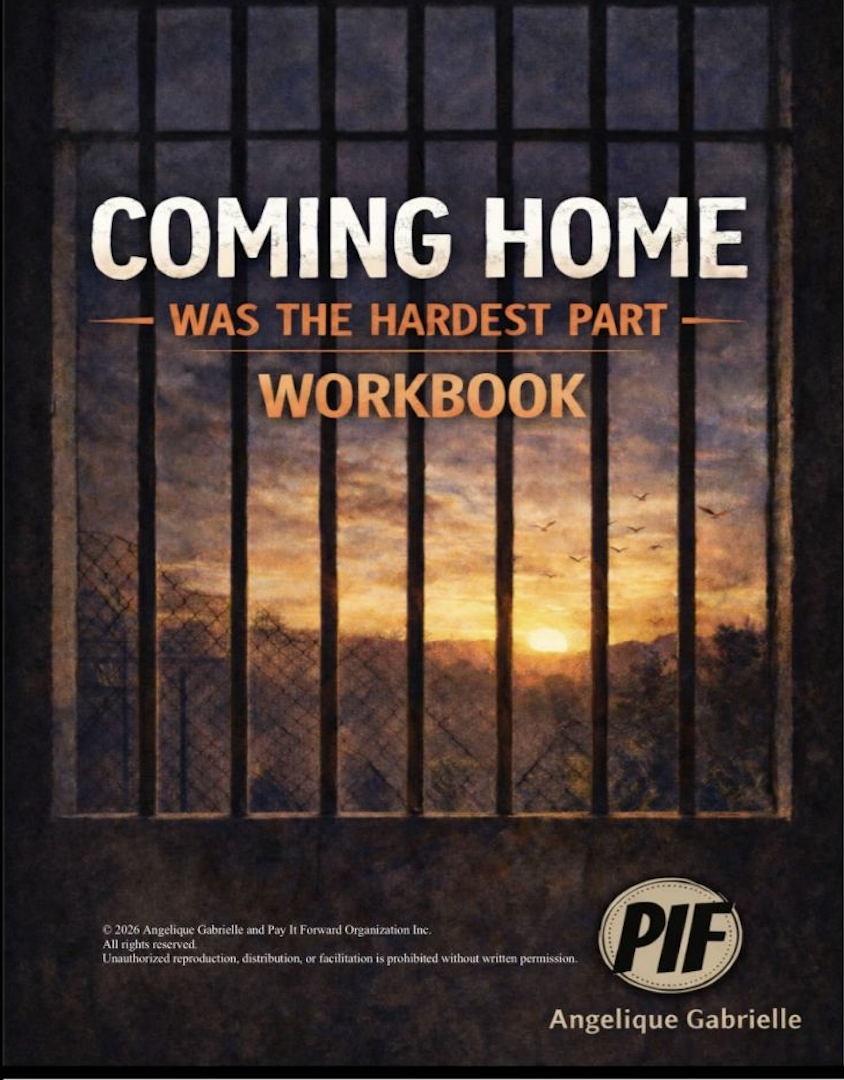
Group-based rehabilitation programming for justice-involved youth. Part 1 serves as the first structured, facilitation phase of the program, guiding participants through group discussions, writing prompts, emotional processing, accountability, work, communication, skills, and self-reflection exercises.
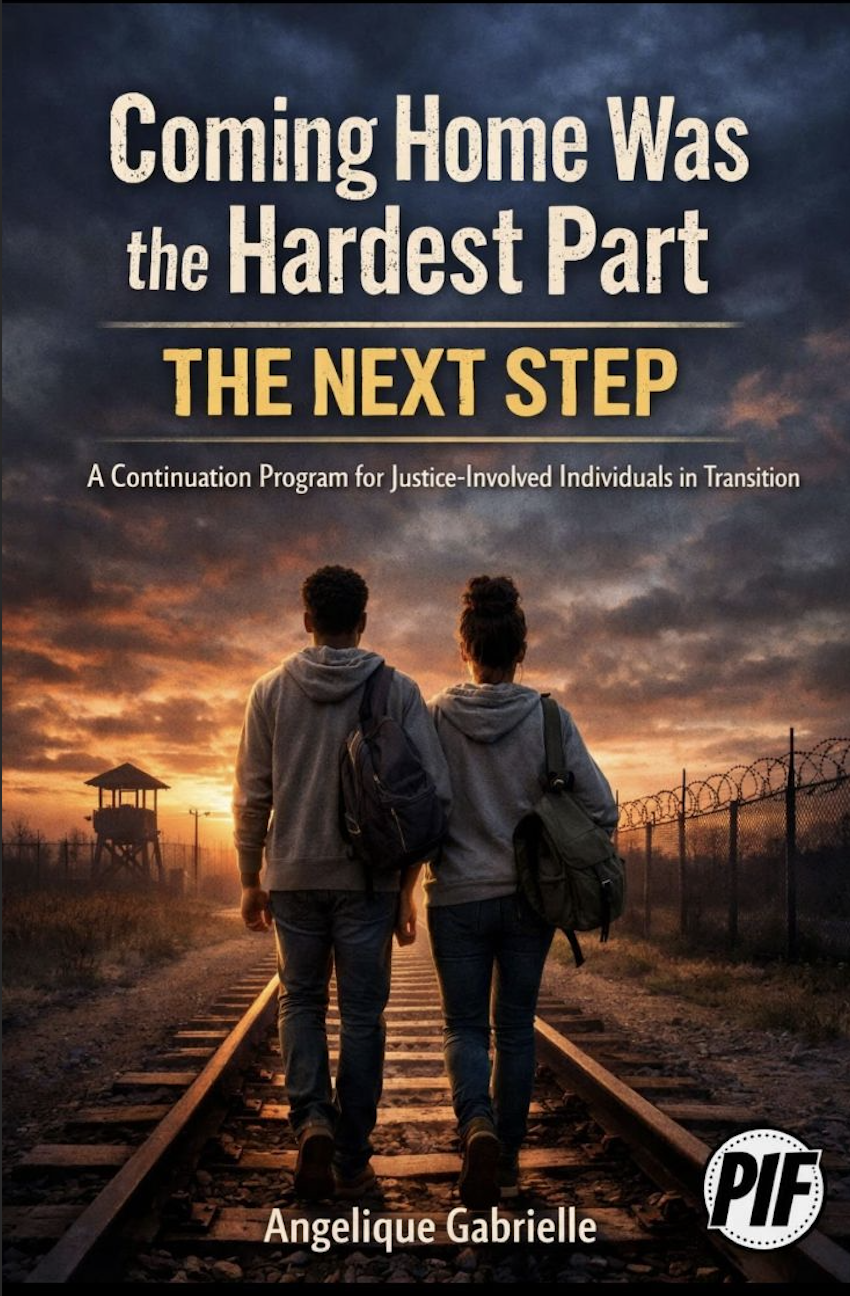
A Continuation Program for Justice-Involved Individuals in Transition. The next step continues the program by expanding into deeper conversations, surrounding identity, boundaries, emotional regulation, relationships, decision-making, and long-term personal growth through continued, guided facilitation.
Support our mission by purchasing our books and workbooks on Amazon.
by Angelique Gabrielle
They let you out… but no one teaches you how to live again. Coming home isn’t the relief people think it is. It’s pressure. It’s silence. It’s figuring everything out with no structure, no safety net, and no room to fail. In Coming Home Was the Hardest Part, Angelique Gabrielle gives a raw, unfiltered look at life after incarceration — the parts people don’t talk about. From loneliness and rebuilding identity to navigating survival mode and real responsibility, this book breaks down what it actually takes to start over. This isn’t a success story dressed up for approval. This is the truth about what it takes to rebuild from nothing — mentally, emotionally, and in real life. Because freedom isn’t the end of the story. It’s where the real work begins.
Pay It Forward partners with juvenile halls, correctional facilities, and community-based organizations to deliver structured rehabilitation and reentry programming.
Supporting growth, reflection, accountability, and rehabilitation through structured programming.
Weekly participant surveys and feedback are used throughout facilitation to help measure engagement, emotional reflection, accountability, and overall program effectiveness.
Your support enables us to expand our programs and reach more justice-impacted individuals. Every contribution makes a meaningful difference in creating pathways to successful reentry and rehabilitation.
Contact us to learn more about bringing our programs to your facility or organization.